
A standard homeowners policy does not cover earthquakes. If you own a home in California or anywhere earthquakes happen, deciding whether to buy earthquake insurance is practical, not just theoretical. It comes down to math, cash flow, and your lifestyle. You can choose now how you would rebuild, or that choice will be made for you after the next big quake.
The more you have invested in your home and your life there, the more important it is to understand how earthquake insurance works. Skipping coverage might seem like saving money, but it could be a risky bet on your future.
"Consider flood and earthquake coverage for your home. Many people overlook it and think it's too expensive. But there's a reason for the cost: people actually use it."
Mike Tanghe, Falcon West
Your homeowners policy does not cover earthquake
A California homeowners policy covers fire, smoke, theft, and many weather-related losses. It does not cover shaking, earth movement, or the structural damage caused by an earthquake.
If a gas line breaks and the house burns, your fire coverage may pay for the fire damage. But if an earthquake caused the break, you are responsible unless you have a separate earthquake policy. In that situation, loss of use, contents, and rebuilding costs aren't covered.
Earthquake insurance is a separate policy. In California, you usually get it in one of two ways: through a standardized California Earthquake Authority (CEA) policy sold by a participating homeowners carrier, or through a private-market policy from companies that insure high-value homes.
Will another earthquake hit California?
Yes. The real questions are where it will happen, how big it will be, and whether your home and finances are prepared.
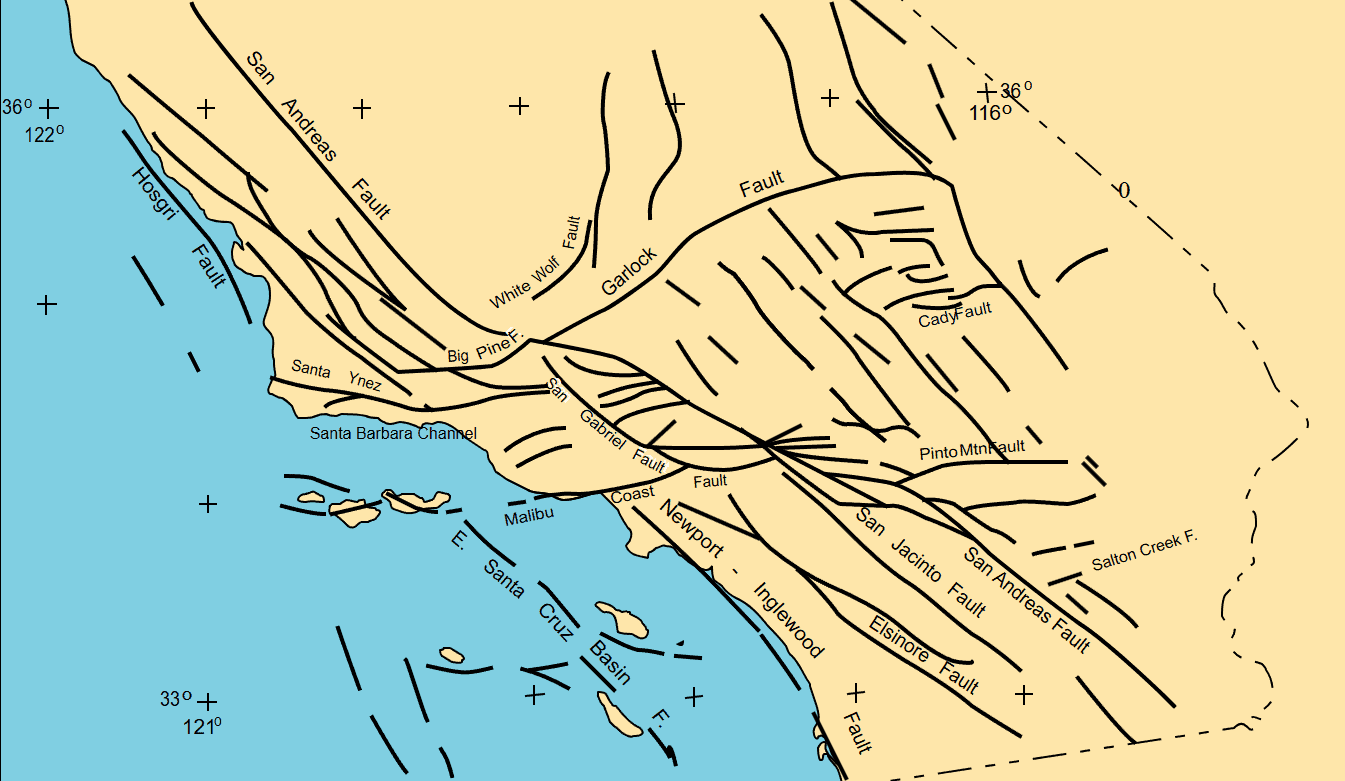
The San Andreas is the country's most famous fault, a roughly 750-mile system running from the Salton Sea to Point Arena. The southern segment, east of Los Angeles, has not had a major surface rupture in more than 300 years. The USGS ShakeOut Scenario for a magnitude 7.8 on that segment projects more than $200 billion in damage.
San Diego is easy to underestimate. The Rose Canyon Fault runs through downtown and La Jolla and connects to the Newport-Inglewood system. Together they can produce a magnitude 7.3 to 7.4 event. A 2024 GPS study raised the Rose Canyon slip rate to 2.4 mm per year. An Earthquake Engineering Research Institute scenario for a magnitude 6.9 on this system projected $38 billion in damage, 120,000 buildings damaged, and about 36,000 people displaced. San Diego County is Seismic Zone 4 and Seismic Design Category D, the highest category for standard residential construction.
In the Bay Area, the Hayward Fault is the one most seismologists watch. UC Berkeley puts the chance of a magnitude 6.7 or larger on the Hayward before 2043 at 33%. The broader Bay Area figure is 72% over the same 30-year window.
30-year probability of a magnitude 6.7+ earthquake
| Region | 30-year probability |
|---|---|
| Statewide (greater California) | Greater than 99% |
| Northern California | 95% |
| Southern California | 93% |
| Bay Area | 72% |
| Los Angeles region | 60% |
| San Diego region | 18% |
San Diego's 18% chance may seem small compared to the Bay Area, but it is not. An 18% chance of a major quake over 30 years is about the same as the chance of filing a fire claim during a typical policy. Almost everyone buys fire coverage with those odds, but most San Diego homeowners still skip earthquake insurance.
The 1994 Northridge earthquake, with a magnitude of 6.7, killed 57 people and caused $20 to $25 billion in damage. It led to changes in building codes. Homes built after 1997 perform much better than those built before 1980, though they are not completely safe, just easier to repair. If your house is older, retrofitting is important for both safety and insurance. The state's Earthquake Brace + Bolt program helps pay for foundation bolting and cripple-wall bracing. CEA offers a 25% premium credit for a verified retrofit, and private insurers offer similar credits.
A longer look at the faults, Northridge, and the buy-or-not math is coming as a Weekly Insights piece.
Is earthquake insurance worth it?
Averages don't decide this; your finances do. We guide clients through four key questions.
1. How much equity is at risk in the house?
If you have a small stake in a home you plan to sell, your situation is different from someone who owns a custom home outright. The more of your net worth is tied up in a house at risk for earthquakes, the more important the policy becomes.
2. Could you write the check if the house were heavily damaged?
Imagine a serious but not total loss, such as 30% to 50% of your home's value. For example, a $2 million home with $700,000 in damage. If paying that out of pocket would hit retirement, education plans, or the business, insurance is easier to justify.
3. How important is staying in the same life while it is rebuilt?
After a major earthquake, it takes longer to get labor, materials, and permits. Loss-of-use coverage helps your family stay in the same schools and neighborhood for 12 to 24 months. A small allowance will not be enough.
4. What are you paying to cap the downside?
Compare the premium to the loss you are protecting against, not to last year's homeowners bill. A policy that costs a few thousand dollars a year but covers a six- or seven-figure rebuild is more valuable than it might seem at first.
Opting out is still a decision. It means self-insuring the entire loss.
How earthquake deductibles really work
Earthquake deductibles are usually a percentage of the dwelling limit, not a flat $5,000 or $10,000.
Example: the house is insured for $1,000,000, and the earthquake deductible is 10%. Your structure deductible is $100,000. If a quake causes $400,000 of covered structural damage, the insurer pays $300,000. You pay the first $100,000.
That deductible may seem high until you compare it to having no policy. Without earthquake coverage, you would be responsible for the entire $400,000 loss.
Three levers matter:
- Deductible percentage. Common options run from 5% to 25% or more. Lower percentage, higher premium.
- How it applies. Some policies apply the percentage separately to dwelling, contents, and loss of use. Others use one combined deductible.
- Dwelling limit accuracy. If the house is underinsured, the deductible shrinks, and so does the most the insurer will pay. After a regional event, contractor bids rise. An underinsured limit shows up there.
The real question is not whether a 10% deductible is scary. Instead, ask yourself: in a serious but not total loss, what amount could you actually pay out of pocket, so the worst case is still manageable?
CEA vs private earthquake insurance
In California, many households buy earthquake insurance through the California Earthquake Authority, a publicly managed pool sold only through a participating homeowners carrier. Higher-value homes, and homes whose homeowners carrier is not in the CEA, usually need the private market.
CEA offers real coverage. For a typical house with a participating carrier, it can be a good choice. It is not a good fit if your home has a pool, an outdoor kitchen, brick or stone, a wine collection, art, or if you need to rent a comparable home for two years.
If your homeowners carrier left California, or you are on the FAIR Plan without a difference-in-conditions policy, CEA is often closed to you. Private earthquake becomes the option, not the upgrade.
What CEA actually covers, and the exclusions that matter on high-value homes, will be its own Insights post.
What high-value homes lose on a standard CEA policy
Most comparison pages skip this section. CEA is designed for a typical California house, not for the kind of homes many of our clients own.
Features commonly excluded or tightly limited on CEA:
- Swimming pools, spas, and outdoor kitchens
- Masonry veneer, brick or stone siding, decorative walls
- Patio coverings
- Fountains, murals, stained glass, chandeliers, statuary
- Artwork, excluded entirely
- Breakables (crystal, china, ceramics), capped at $500
- Wine and beverages in glass or ceramic, capped at $3,000
- Jewelry and watches, $3,000 in the aggregate, $1,000 per item
If these features describe your property, you are not just choosing between CEA or nothing. You are deciding whether the policy you buy will actually rebuild the home you live in.
Four seismic upgrades underwriters look for
When PURE, Chubb, and Cincinnati review a California house, they focus on four key items. These affect how the house performs in a quake and can also change your premium.
- Water heater bracing. Double-strapped. Required at sale in California. Cheap, and it prevents a gas or water line break after the shaking stops.
- Seismic gas shut-off valve. Cuts the gas when the ground moves. Secondary fires are often worse than the quake.
- Foundation bolting. Keeps a raised wood-frame house on its foundation. Pre-1970s homes are the ones that slide.
- Cripple wall bracing. This is the short wall between the foundation and the first floor. If it is not braced, it can shift during a quake, and the house above can be damaged.
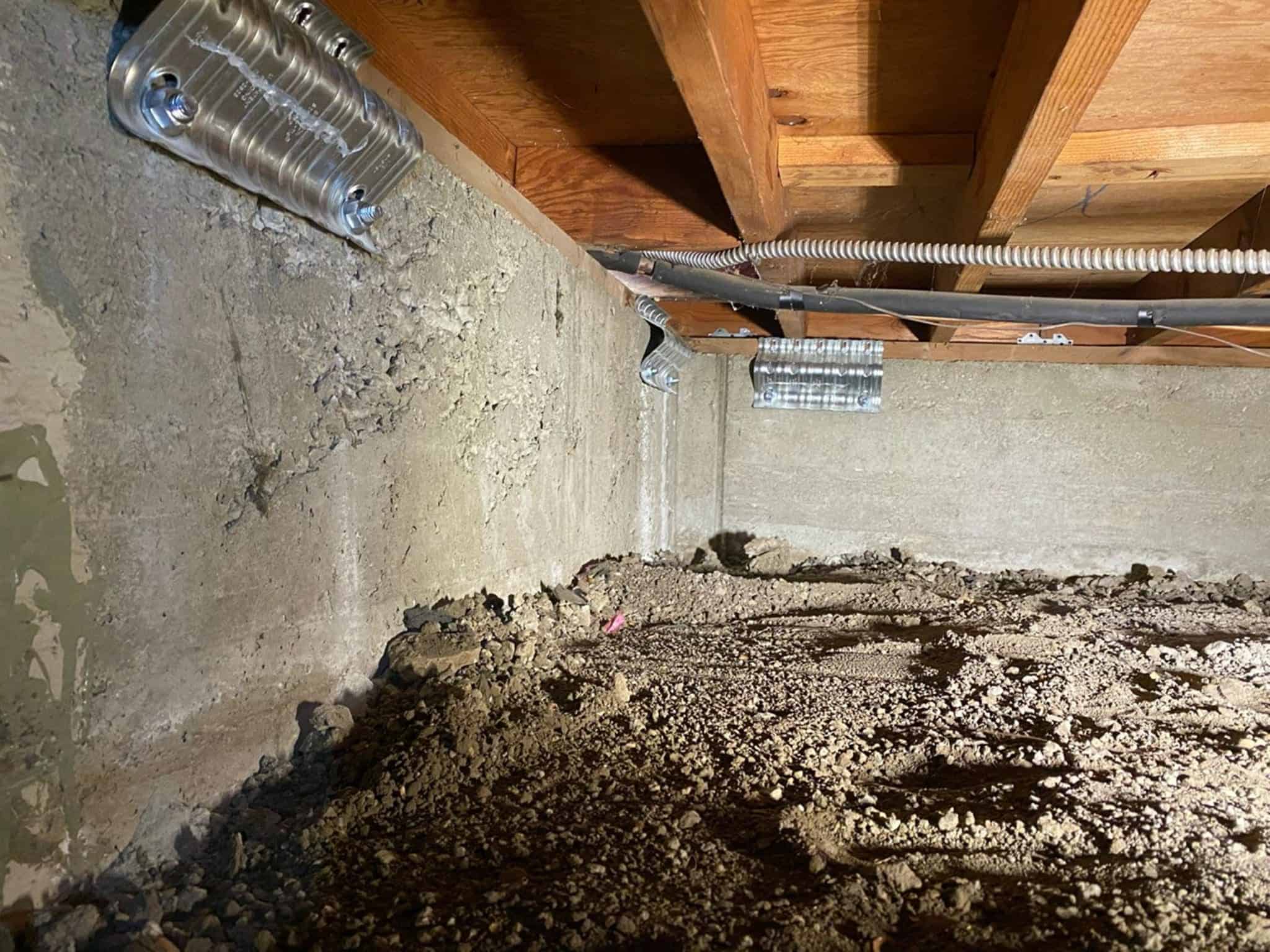
The state's Earthquake Brace + Bolt program can help pay for bolting and cripple-wall work. As of 2026, eligible homeowners may get up to $3,000, and those with lower incomes may get additional help up to $7,000. A verified retrofit can also lower your earthquake insurance premium. CEA offers a 25% retrofit credit. Learn more here.
Trusts, LLCs, and the name on the policy
If the house sits in a revocable trust or an LLC, the earthquake policy must reflect that. Same named insured as the homeowners policy. If the names don't match, it becomes a problem when you file a claim: the person or entity that suffered the loss isn't listed on the policy. Update both policies when you change the title, set up a trust, or move a rental into an entity. Name your trust on your insurance policies.
How earthquake fits the rest of the program
Earthquake insurance is not a standalone purchase. It works alongside your homeowners, flood, auto, and umbrella policies.
- Homeowners may pick up a fire that starts after the quake. The shaking itself needs the earthquake policy.
- Loss-of-use coverage should be enough to keep your family in the same lifestyle for 12 to 24 months, not just cover a week in a hotel.
- Umbrella sits above liability if someone is hurt on the property in the chaos after.
- Flood is a different coverage. A dam or levee failure is not an earthquake claim.
The families we work with treat earthquake risk the same way they treat wildfire and flood: these events are rare but can be very severe. You don't insure against every possible risk, but you shouldn't leave a major gap in your coverage.
Earthquake insurance, in brief
- A homeowners policy does not cover earthquakes. You need to buy that coverage separately.
- California has a greater than 99% chance of a magnitude 6.7 or larger earthquake in the next 30 years. San Diego's chance is 18%. These are not reasons to skip coverage.
- Deductibles are a percentage of your home's insured value. Without a policy, you are responsible for the entire loss.
- CEA offers standardized coverage and often fits a typical house well, but it has serious exclusions you need to know before you bind. High-value homes usually need private-market insurance.
- CEA coverage especially does not work well for homes with pools, outdoor kitchens, masonry, art, or wine collections.
- Brace the water heater, install a gas shut-off valve, bolt the foundation, and brace the cripple walls.
Read next
Four seismic guidelines to review before building or insuring a home in California
The four features underwriters at PURE, Chubb, and Cincinnati look for, plus California retrofit grants.
Start a review
If you want a detailed review of how an earthquake could affect your current insurance program and what it would cost to limit your risk, send us your declaration pages. We work with successful families across the country, from San Diego to Minnesota, and we place earthquake coverage with Chubb, PURE, Cincinnati, AIG Private Client, and others.
Start a review · hello@falconwest.com · 619-452-2524

